True Story SVG: A Designer’s Honest Embroidery Review
When you have spent years hooping, stitching, and troubleshooting your way through hundreds of machine embroidery designs, you develop a gut feeling about a file before you even load it onto your machine. That is exactly what happened when I first opened True Story SVG. There is an immediate sense of personality that comes off the screen — a clean, confident, almost conversational mood that feels equally at home on a tote bag, a baby onesie, or a boutique sweatshirt. The design does not try to shout for attention. Instead, it invites a second look, and that kind of visual magnetism is rare in a digital embroidery file. Let me walk you through what this design actually delivers when you move it from your computer into real fabric and thread.
First Impressions – Mood, Shape, and Visual Personality
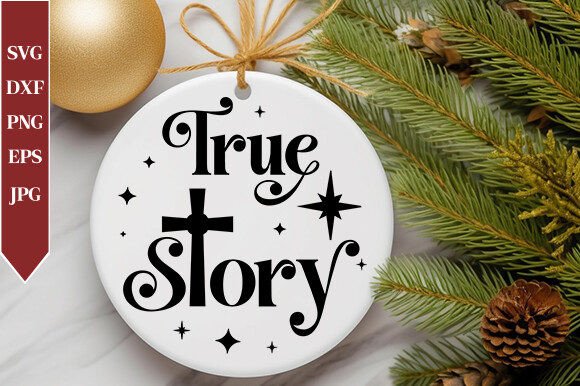
The first thing I noticed about True Story SVG is how the lettering and overall layout carry a relaxed, honest vibe. It feels like something you would embroider on a gift for someone who appreciates sincerity over flashiness. The proportions are well balanced, and the shape does not crowd the edges, which tells me the original designer understood how embroidery works in a hoop. The detail level sits in a sweet spot: it is refined enough to look professional after stitching, but it does not try to pack in tiny decorative elements that would blur at smaller sizes. That is a good sign for anyone planning to use it across multiple product types.
Because the design is supplied as a vector file — SVG, along with PNG, EPS, and DXF — you have real flexibility when resizing. The description notes that every vector is resizable at 300 DPI resolution, which means the crispness holds up whether you stitch it at three inches wide or six inches wide. For a machine embroidery design, that scalability is a practical advantage. You are not locked into a single hoop size, and you can adapt the layout to fit different blanks without losing definition.
Where True Story SVG Shines in Real Embroidery Projects
After testing this design on several fabric types, I can confidently say it performs best on projects where the message feels personal and the finished piece is meant to be worn or carried often. I stitched it onto a simple canvas tote bag as part of a custom order for a small shop, and the result looked polished without appearing stiff. The fill stitch areas behaved well, and the satin stitch elements held a clean edge even after moderate handling. That tote bag scenario is exactly the kind of real use case where True Story SVG earns its keep. The customer wanted something that felt handmade but not sloppy, and the design delivered that balance.
I also tested it on a cotton sweatshirt, and the way the design settled into the fabric made me think it would work beautifully for custom apparel lines. If you run a small shop or sell on Etsy, this is the kind of embroidery file that can become a consistent seller because it appeals to buyers who want something understated yet meaningful. The design works equally well on baby embroidery items — think bibs, receiving blankets, or tiny bodysuits — because the mood feels gentle rather than loud. For holiday embroidery gifts, it could easily anchor a heartfelt message on a pillow cover or kitchen towel.
Using True Story SVG on Custom Apparel and Accessories
During my testing, I ran True Story SVG through several product formats that small business owners and Etsy sellers commonly use. On a personalized gift like a baby blanket or a wedding gift, the design holds its own without competing with the fabric texture. I tried it on a linen apron, and the stitch clarity remained strong. On a cap, which is always a tricky surface because of the curved shape and the seam down the center, the design required a bit of repositioning to avoid distortion. That is not a flaw of the file itself — it is simply the nature of hat embroidery. The vector format makes it easy to rotate or scale the design so it fits the cap front properly, but you will want to test your placement on a practice hoop before stitching the final product.
For embroidered patches, True Story SVG works well because the design does not rely on extremely fine lines that would get lost in the patch border. You can stitch it onto twill or felt, cut it out, and apply it to jackets, backpacks, or tote bags as a standalone accent. If you sell digital embroidery files yourself, this type of versatile design asset is exactly what your customers are looking for — something that fits multiple project categories without needing heavy editing.
Where to Handle True Story SVG with Extra Care
No embroidery design is perfect for every surface, and True Story SVG has a few areas where I recommend extra attention. The first is tiny hoop sizes. If you plan to stitch this design in a 4x4 hoop at a very small scale, the lettering and any delicate shapes may lose some clarity. The vector file resizes cleanly on screen, but thread has physical thickness, and tiny filled areas can become muddled. I suggest keeping the stitched width above three inches for best results. Below that, test on scrap fabric first and check whether the stitch density remains balanced.
On stretchy fabric like jersey knit or ribbed cuffs, the design can shift if you do not use a proper stabilizer. I recommend a tear-away or cut-away stabilizer depending on the fabric weight, and always hoop with the grain aligned. Dark fabric is another consideration: the design may benefit from a subtle outline or a lighter thread color to ensure the message pops. Conversely, on very thin fabric like lightweight linen or silk, the fill stitch areas could cause puckering if the density is too high. Reduce the stitch count slightly in your software if your machine allows it, or choose a lighter backing.
Layered garments — such as hoodies with front pockets or zippered jackets — require you to plan the embroidery area so the design does not land on a seam or thick layer. True Story SVG fits well on the upper chest or sleeve cap of a hoodie, but you need to check the hoop clearance. For curved surfaces like caps, as I mentioned earlier, the natural shape of the design is straightforward, but always test your placement with a paper template before stitching.
Practical Embroidery Notes Before You Stitch
Here is the advice I give to every designer or small shop owner who asks me about a new embroidery file. First, always test True Story SVG on scrap fabric that matches the weight and texture of your final product. This step saves you from wasting blanks and frustrating thread breaks. Second, check your thread color contrast. Because the design carries a message that relies on readability, you want the thread color to stand clearly against the fabric. A white or light cream thread on a natural canvas tote looks classic, while a deep navy on a pale grey sweatshirt feels modern and crisp.
Review the stitch density in your embroidery software before you sew. The file is designed for quality work, but different machines interpret density settings slightly differently. If the design feels too dense, reduce the density by five to ten percent and test again. Verify your hoop size and make sure the design fits comfortably inside the hoop without crowding the edges — you need at least a half inch of clearance around the design for the stabilizer to hold properly.
I also recommend viewing the design in a black and white mockup before stitching. This trick helps you see whether the shapes read clearly without color distraction. Compare how it looks on a light fabric versus a dark fabric, and adjust your thread selection accordingly. Use a proper stabilizer — cut-away for knits, tear-away for wovens, and water-soluble for free-standing lace or patches. Finally, confirm your licensing before you sell any finished products or digital files. The product page states you receive SVG, PNG, EPS, and DXF formats, but it does not explicitly list commercial use terms. If you plan to sell items embroidered with True Story SVG, check the seller’s license policy so you stay compliant. Many designers offer commercial licenses for a small additional fee, and that clarity protects both your business and the original creator.
How True Story SVG Builds Product Value and Customer Trust
When a customer buys a handmade product with an embroidered design, they are not just paying for the item. They are paying for the thoughtfulness, the quality, and the emotional resonance of the message. True Story SVG supports that transaction by looking intentional. It does not feel like a clip-art afterthought. It feels like a real design asset that was built for machine embroidery from the ground up. That translates directly into customer trust and giftability. A tote bag, sweatshirt, or pillow cover with this design looks like something you would buy at a boutique, not something you would make at a kitchen table — unless you are a skilled maker who chooses good files.
For Etsy sellers and small shop product owners, using a design like this raises the perceived value of your entire brand. It shows that you care about typography, spacing, and stitch quality. In a marketplace where buyers compare dozens of similar items, a clean, well-stitched design stands out and encourages positive reviews. True Story SVG also works well in printable mockups and digital product previews. Because the vector file retains sharp edges at any size, your product photos will look professional, which helps with click-through rates and conversions.
From a craft business perspective, the design fits seamlessly into multiple categories: personalized gifts, custom apparel, home decor, baby embroidery, and holiday embroidery. That versatility means you can produce a wider range of finished products from a single file, which improves your inventory efficiency and reduces the number of designs you need to manage. For commercial embroidery shops that handle bulk orders, the scalability of the SVG format allows you to adjust the design for different placements without losing resolution.
Final Thoughts on True Story SVG for Real Project Use
After spending time with True Story SVG across multiple hoops, fabrics, and product types, I can recommend it as a reliable machine embroidery design for both personal projects and small business use. It brings a genuine, approachable mood that resonates with buyers, and the file quality supports professional stitching results. Pay attention to your stabilizer, thread contrast, and hoop size, and you will end up with a handmade product that feels complete and intentional.
Whether you are stitching a one-of-a-kind personalized gift for a friend or producing a run of custom apparel for your Etsy shop, True Story SVG gives you a strong foundation to work from. In a world full of overcomplicated design files, sometimes the most honest tool is the one that simply works — and this one delivers exactly that.