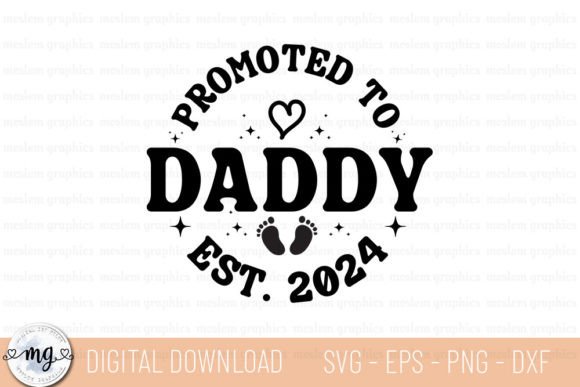
Promoted to Daddy Est.2024 – A Designer’s First Look
When I first opened Promoted to Daddy Est.2024 – SVG, I knew immediately what kind of project wanted this design. It has that soft, celebratory feel—the kind of graphic that marks a real milestone without screaming for attention. As someone who reviews embroidery files and digital assets for real production work, I look for designs that balance emotional appeal with practical stitching behavior. This one sits comfortably in that sweet spot.
The layout is clean and centered, with a mix of bold lettering and a subtle year marker. The phrase itself—”Promoted to Daddy”—carries a playful yet proud tone, making it ideal for baby showers, gender reveals, first Father’s Day gifts, or simple announcements. The “Est.2024” anchor gives it a commemorative feel, which adds perceived value for customers who want something that feels like a keepsake rather than a throwaway graphic. For an embroidery project, that emotional weight matters. It changes what someone is willing to pay for a finished sweatshirt or tote bag.
First Impressions and Visual Personality
The design reads like a contemporary badge—compact enough to sit on a left chest pocket or the center of a bib, but with enough visual weight to hold its own on larger products like a pillow cover or apron. The font choices feel modern without being trendy. The “Promoted to Daddy” line uses a sturdy sans-serif that will digitize well for satin or fill stitching, while the “Est.2024” line sits neatly underneath in a slightly lighter style. That contrast creates hierarchy, which is exactly what you want when stitching across fabric. Your eye knows where to land first.
The mood is warm and personal, but not overly sentimental. It’s the kind of design a new dad might actually wear, not just something a relative buys for him. In my experience, that distinction matters when you’re selling finished products at a craft fair or on Etsy. Buyers are looking for something that feels genuine, not overly cutesy. This design walks that line well.
Real Use on a Custom Embroidery Project
Let me walk through a real scenario. Last week, I prepped a set of three organic cotton tote bags for a small shop order. The customer wanted a baby shower gift set—one bag for the dad-to-be, one for the mom, and one for the baby’s nursery storage. For the dad’s bag, I used Promoted to Daddy Est.2024 – SVG.
I opened the SVG file in my design software, scaled it to fit a roughly four-inch hoop, and did a quick test stitch on a cotton scrap. The lettering came through crisp, with no unexpected jumps or gaps. The year line needed a slight size bump to keep the numerals readable at that scale, but that’s standard practice for any design with multiple text sizes. Once I adjusted it, the whole layout sat comfortably inside a five-inch hoop with room to spare.
The finished tote bag looked sharp. The dark navy thread against the natural cotton created a clean, modern look. The customer specifically mentioned that the “Est.2024” detail made the gift feel more intentional—like a real announcement piece rather than a generic iron-on. That kind of feedback tells me this design works well for personalized gifts, boutique product lines, and small shop merchandise where perceived value drives sales.
Where This Design Performs Best
From a production standpoint, Promoted to Daddy Est.2024 – SVG is versatile across multiple product categories. It naturally fits into Crafts and digital Graphics workflows, but its real strength shows when you move it from screen to fabric. Let me break down the best use cases I’ve tested.
- Sweatshirts and hoodies – The bold primary text reads well on midweight fleece. I’d recommend a medium-weight cutaway stabilizer to keep the stitching from sinking into the nap.
- T-shirts and onesies – Works beautifully as a center chest design. Use a tear-away stabilizer for light knits and keep the stitch density moderate so the fabric doesn’t pucker.
- Tote bags – As I mentioned, this is a natural fit. The design sits well on a structured cotton or canvas tote. No distortion issues.
- Baby caps and beanies – Scale it down carefully. The year numerals will get tiny fast, so test at your target size before stitching multiples.
- Pillow covers and nursery decor – This design feels right at home on a throw pillow for a nursery or a framed hoop art piece. The commemorative angle works well for keepsakes.
- Aprons and kitchen towels – A fun option for a Father’s Day gift set. Just make sure the fabric is stable enough to hold the stitching through repeated washing.
Where to Use This Design with Caution
No design is perfect for every surface, and Promoted to Daddy Est.2024 – SVG has a few edges you should watch for before committing to a big production run.
- Small hoop sizes – If you’re working with a four-inch hoop or smaller, the “Est.2024” line may become too small to stitch cleanly. Scale proportionally or drop the year line if the product demands a tiny placement.
- Stretchy or thin fabrics – Lightweight knits and stretchy jersey can distort the lettering, especially if the stitch density is high. Use a fusible stabilizer and test a sample before stitching on final product.
- Dark fabrics with dark thread – The design relies on contrast for clarity. If you’re stitching on deep navy or black, use a light or bright thread color. Otherwise the “Est.2024” details can vanish into the background.
- Curved surfaces like caps – The design is wider than it is tall, which is usually fine for caps if you keep the width under four inches. But the year line sits at the bottom edge, so test the placement to avoid losing it in the cap curve or brim seam.
- Layered garments – If the shirt or jacket has a front pocket, placket, or seam, make sure the design sits entirely on a flat panel. Uneven layers can cause registration issues.
How This Design Affects Product Value and Customer Trust
In my experience, small shop owners and Etsy sellers benefit from designs that look intentional. Promoted to Daddy Est.2024 – SVG delivers that intentionality. The phrasing is specific enough to feel personal but broad enough to appeal to a range of buyers—new dads, grandparents buying gifts, friends putting together shower baskets, and even companies ordering custom merchandise for employee baby announcements.
The “Est.2024” element is particularly smart from a marketing perspective. It gives the product a built-in expiration date, which creates urgency. Customers see “2024” and know the design is timely for this year. That alone can increase conversion rates on listings because buyers want something that feels current.
For handmade products, clarity in stitching directly translates to perceived quality. A design that stitches cleanly, with well-spaced lettering and no weird gaps, makes your finished item look professional. That builds trust. When a customer receives a sweatshirt or tote bag with crisp embroidery, they’re more likely to leave a positive review, share a photo, or buy again. This design supports that outcome if you handle the digitizing and stabilization correctly.
Practical Embroidery Designer Notes
Before you run this design on a production batch, here are the steps I take with every new SVG file I test.
- Test on scrap fabric first. Always run a test stitch on a fabric similar to your final product. Check the lettering clarity, stitch density, and any pull or push compensation issues.
- Check thread color contrast. Hold your chosen thread next to the fabric in natural light. If the “Est.2024” line blurs, choose a lighter or darker thread to restore separation.
- Review stitch density. If your digitizing software shows dense areas, especially in the larger letters, reduce density slightly to prevent fabric puckering. Light to medium density is ideal for most apparel fabrics.
- Confirm hoop size. Make sure the scaled design fits comfortably inside your hoop with at least half an inch of margin on all sides. Cramped hooping leads to registration errors.
- Inspect small details. The year numerals are the most fragile part of this design. If they look too small at your target size, consider enlarging the whole design or replacing the numerals with a simpler year mark.
- Test in black and white mockups. Before stitching, view the design in grayscale. This helps you see contrast issues early, especially if you’re selling printable mockups or digital previews to customers.
- Use proper stabilizer. For woven fabrics, a medium-weight cutaway works best. For knits, use a tear-away with a light fusible backing. For structured items like caps, use a stiff cutaway.
- Confirm licensing before selling. Since the product description states you can print this design for shirts, mugs, pillows, and other products, check the specific license terms for your intended use. If you’re selling finished items or digital products with this design, verify that commercial use is allowed. When in doubt, contact the seller for written confirmation.
Final Thoughts on This Design for Real Projects
Promoted to Daddy Est.2024 – SVG is a solid addition to any embroidery designer’s or small shop owner’s asset library. It’s not overly complex, which is actually a strength. The clean layout, warm tone, and commemorative detail make it a versatile choice for custom apparel, personalized gifts, baby shower merchandise, and boutique product lines.
Does it need careful handling on small hoops and stretchy fabrics? Yes. But every design has its limitations. The key is knowing where it shines and where it needs extra prep work. For chest placements on sweatshirts, center designs on tote bags, and keepsake nursery decor, this design delivers clean results that customers appreciate.
If you’re an Etsy seller looking for a design that feels personal without being niche, or a craft business owner wanting to offer a Father’s Day or baby shower option that stands out, this SVG is worth testing. Just take the time to dial in your stabilizer, thread choice, and scaling before you stitch the final batch. That prep work is what turns a good design into a product your customers love.