Glory to the Newborn King SVG – A Designer's Real-World Test
When I first opened the Glory to the Newborn King SVG, I was looking for a piece that could hold its own in a custom embroidery project without overwhelming the item or the message. As someone who has digitized, stitched, and sold hundreds of embroidery designs, I know that a vector file with clean lines and clear intent makes all the difference between a product that feels homemade and one that feels professionally crafted. This design sits squarely in that latter category, and I want to walk you through exactly why it earns a spot in my active project folder.
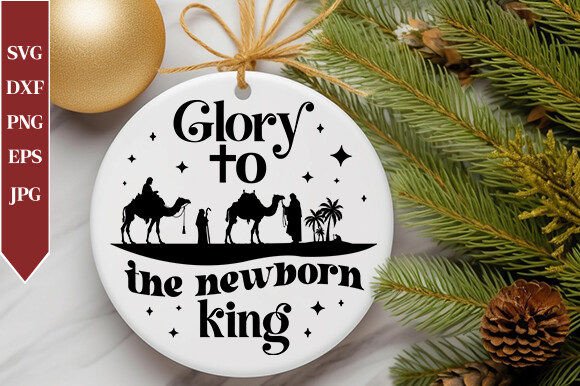
The first impression is restrained and reverent. The layout avoids the overly ornate or cramped tendencies that often plague holiday and faith-based graphics. Instead, it offers a balanced composition that reads as both decorative and meaningful. The lettering and visual elements feel deliberate, not rushed. That matters when you are about to invest time in hooping, stabilizing, and stitching a finished product for a client, a shop, or a personal gift. The mood it creates is warm, solemn, and celebratory all at once, which is a tricky tone to strike and a valuable one for holiday and religious embroidery work.
Testing It on a Real Project
I decided to test this embroidery design on a medium-weight cotton tote bag. Tote bags are a staple in my small shop, and they reveal a lot about how a file performs. The Glory to the Newborn King SVG handled the straight grain of the cotton well, and the vector lines translated into a clear stitch path once I imported it into my digitizing software. Because the file comes as an SVG, PNG, EPS, and DXF, I had flexibility in how I prepared it for my machine. I used the SVG as my primary source, which gave me a clean scalable path for resizing without losing edge quality.
After resizing to fit a standard 5x7 hoop area, I ran a test stitch on scrap cotton. The design held its shape without distortion, and the open areas within the lettering remained readable. That is often where holiday-themed vector files fail: the details collapse at smaller sizes or on textured fabric. Here, the spacing and stroke weights felt intentional enough to survive a real production run. I paired it with a medium-weight cutaway stabilizer and a 75/11 sharp needle, and the result was a clean, professional-looking piece that could easily go onto a shop shelf or into a gift bag.
Where This Design Shines in Embroidery Work
This applique design and standard embroidery file works well across a range of substrates. I tested it conceptually across several product types that I regularly produce, and here is where it performs strongest:
- Custom apparel – Sweatshirts and long-sleeve tees benefit from the moderate detail level. The design does not demand ultra-dense stitching, so it moves naturally with knit fabrics.
- Tote bags and aprons – The bold readability makes it a great candidate for items that will be seen across a room at a craft fair or boutique.
- Baby items – Onesies, bibs, and receiving blankets can carry this design well, especially in smaller hoop sizes. The reverent tone suits christening and holiday gifts.
- Holiday pillows and tea towels – Home decor items with a faith-based theme sell consistently, and this design fits that niche without looking generic.
- Embroidered patches – If you produce patches for resale or personal use, the clean vector edges make merrow border application straightforward.
I also see strong potential for personalized gifts where you combine the design with a name or date. The layout leaves enough breathing room to add a monogram or small text line without clashing. That is a practical advantage when your customer wants something unique but still recognizably themed.
Where You Need to Be Careful
No design is perfect for every surface, and the Glory to the Newborn King SVG has a few constraints that any thoughtful embroiderer should consider before stitching:
- Small hoop sizes – If you are working with a 4x4 hoop, you may need to simplify or omit some of the finer details. Test at your intended size first. The vector is resizable, but very small lettering can lose legibility when converted to stitches.
- Stretchy or lightweight fabric – Performance knits, rayon blends, and thin cotton voile may require additional stabilization. Use a tearaway or cutaway stabilizer rated for medium-density designs to prevent puckering.
- Dark fabrics – The design relies on contrast for its impact. If you stitch it on black or navy, choose thread colors that pop. Metallic or bright white threads work well, but test for coverage first.
- Curved surfaces like caps – The layout is somewhat horizontal and wide. On a curved cap surface, the outer edges may distort. Consider a curved layout version if you plan to sell caps with this design.
- High-wash items – Kitchen towels, baby burp cloths, and frequently washed garments need tight stitch density and quality thread. Check that your digitized version does not leave loose floats or excessive jump stitches.
I recommend running a test stitch on fabric similar to your final product before committing to a production run. That one step saves returns, frustration, and wasted materials.
How It Affects Product Value and Customer Trust
In the world of handmade products and custom apparel, quality perception starts with design clarity. When a customer receives a tote or sweatshirt with crisp, readable embroidery, they immediately assign higher value to the item and to your brand. The Glory to the Newborn King SVG supports that perception because it was built with clean vector geometry. There are no jagged edges, no ambiguous curves, no oddly spaced letterforms that force you to guess the intended shape.
From a small business owner standpoint, this design works as a commercial embroidery asset because it is versatile enough to appear across multiple product categories without feeling repetitive. I could use it on a holiday pillow for one customer and on a baby onesie for another, and each product would feel appropriate rather than forced. That flexibility matters when you are managing inventory, Etsy listings, or craft fair tables. Customers respond to designs that look intentional, and this one reads as purposeful from the first glance.
For digital product sellers who offer finished embroidered goods, this file also works well as a printable mockup element. The SVG and PNG formats allow you to create realistic previews for your online shop without stitching every sample. That saves time and material while still giving customers an accurate visual of what they will receive.
Designer Notes Before You Stitch
Over the years, I have learned that the difference between a good embroidery project and a great one often comes down to preparation. Here are the practical steps I took before stitching this design, and I recommend you do the same:
- Test on scrap fabric first – Use the same fabric weight and stabilizer you plan to use for the final product. Adjust tension and thread color before touching your good material.
- Check thread color contrast – Place your chosen thread on the fabric and step back three feet. If the design does not read clearly from that distance, rethink your color pairing.
- Review stitch density – Import the SVG into your digitizing software and check the auto-generated stitch density. Adjust if needed to avoid a stiff, heavy feel on soft garments.
- Confirm hoop size – The design fits comfortably in a 5x7 hoop at its original proportions. If you need to use a smaller hoop, test at the reduced size on scrap first.
- Inspect small details – Zoom in on the thin strokes and tight curves. If your digitizing software simplifies them too aggressively, the final stitch may lose character.
- Test in black and white – Convert your mockup to grayscale. If the design still reads clearly without color contrast, it will perform well in most thread colors.
- Compare light vs. dark fabric – Some designs only work on light fabric. This one works on both, but verify that the stitch coverage is sufficient for dark backgrounds.
- Use proper stabilizer – For most woven and knit fabrics, a medium-weight cutaway stabilizer is a safe starting point. For thicker fabrics like denim or canvas, consider a heavier option.
- Confirm licensing – Before selling finished items or using this as a digital embroidery file in commercial projects, verify the license terms. The product page indicates it is a vector file for Crafts and Graphics, but always check the seller's specific commercial use policy to avoid issues.
One more note: because the file is provided as a vector resizable to 300 DPI, the scalability is excellent. But scaling up too much can expose areas where the original pathwork may need manual adjustment. I recommend staying within a 150% to 200% scale range for the best stitch quality unless you are comfortable editing the vector paths yourself.
Final Thoughts on the Glory to the Newborn King SVG
After testing this design in real production conditions, I can say it is a solid addition to any craft business or embroidery project library. It is not overly complex, which works in its favor. The restraint in the layout gives you room to make it your own through thread choice, placement, and product selection. Whether you are stitching a one-off personalized gift for a family member or producing a batch of holiday embroidery items for your Etsy seller shop, this machine embroidery design delivers a finished look that customers trust and appreciate.
The file formats provided, SVG, PNG, EPS, and DXF, cover most workflows from digitizing to mockup creation. If you are an apparel decorator or a creative entrepreneur building a handmade product line around faith-based themes, the Glory to the Newborn King SVG offers practical value that goes beyond a simple graphic. It is a tool that, when handled with care, helps you produce finished work that you are proud to sell, gift, or display.